




Built for the boil, kept for decades
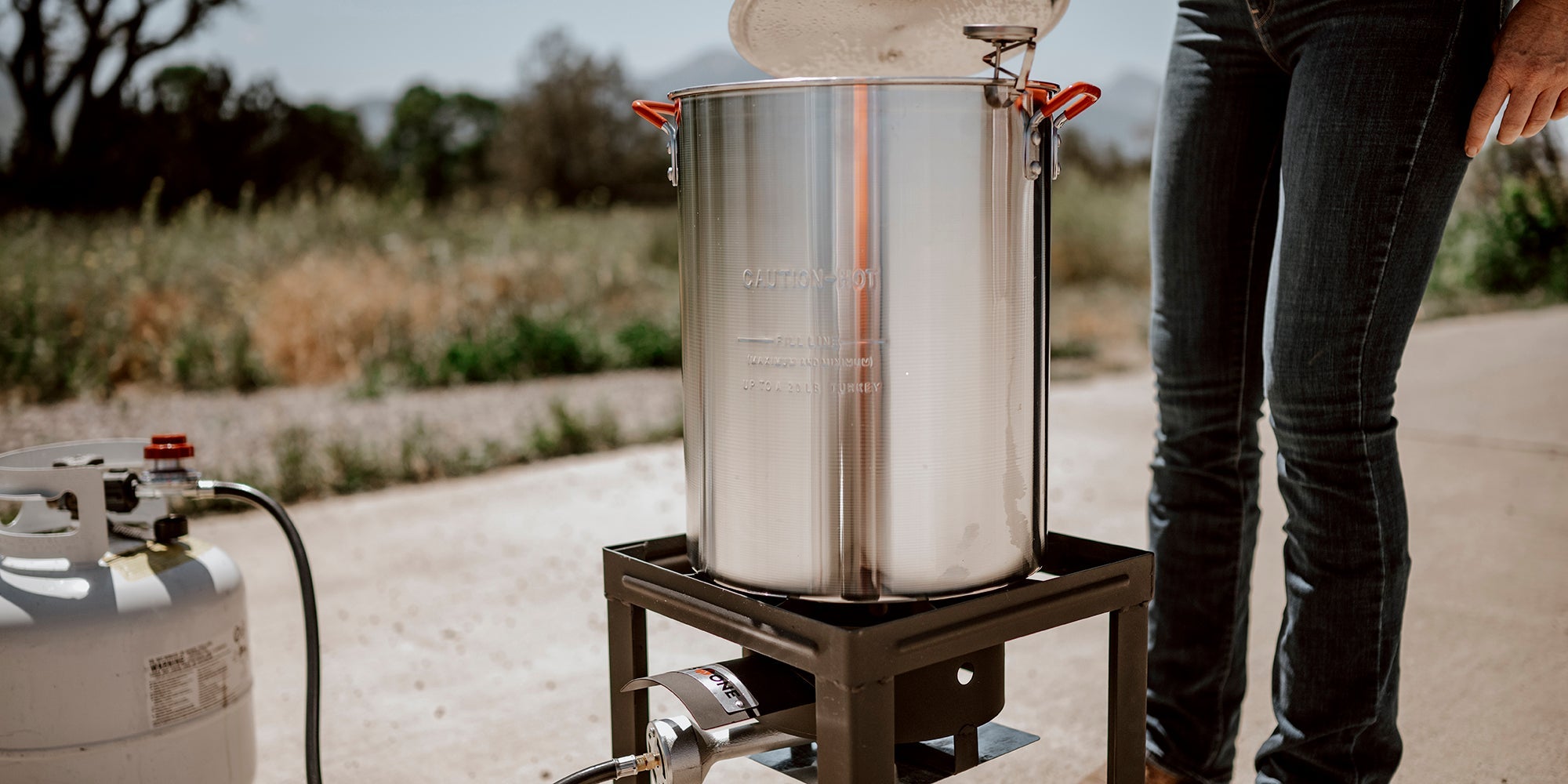
A big stainless stockpot is the backbone of every crawfish boil, crab feed, and low country spread. It takes a beating: hours over a high-output propane burner, gallons of heavily salted water, potatoes and corn shedding starch, and seasoning blends that cling to every surface. Clean it right after each cook and a quality pot will outlast the burner, the folding tables, and probably the cooler too.
The problem is size. A 20 QT pot holds 5 gallons, and an 80 QT pot holds 20 gallons, which weighs well over 160 pounds when full. These pots don't fit in a sink or dishwasher, and the residue they collect is different from a weeknight soup pot. This guide covers exactly how to handle it.
The short answer: Let the pot cool, drain it outdoors, and rinse with a hose while residue is still soft. Wash with hot water, dish soap, and a non-scratch scrubber. Remove white film with white vinegar and rainbow stains or rust spots with an oxalic acid cleaner like Bar Keepers Friend. Dry completely, including the spigot, before storing.
What you'll need
Most of this is already in your garage or under the kitchen sink.
- Garden hose with a spray nozzle for the first rinse and drain-out
- Dish soap (a degreasing formula like Dawn cuts seasoning oils best)
- Non-scratch scrub pads or a nylon brush, plus a long-handled brush for the bottom of tall pots
- Baking soda for burnt-on residue and odors
- Distilled white vinegar for white mineral and starch film
- Bar Keepers Friend (powder or soft cleanser) or another oxalic acid cleaner for heat tint, stains, and light rust
- Wooden or nylon scraper for stuck-on bits
- Bottle brush or pipe cleaner for the spigot and valve
- Microfiber towels for drying
- Rubber gloves, since boil seasoning is hard on skin and cuts
How to clean your stockpot after a boil, step by step
The best time to clean a boil pot is within an hour or two of the cook. Fresh residue rinses away; residue left overnight bakes on and invites salt pitting.
- Shut off the burner and let it cool. Turn off the propane at the tank and give the water time to drop to a safe temperature. Never lift or tip a full pot of boiling water. A 60 QT pot of water weighs roughly 125 pounds.
- Lift out the basket and drain the pot. Pull the strainer basket and set it aside. Drain through the spigot if your pot has one, or bail it down before tipping. Dump the water on gravel or grass away from plants you care about, not into a storm drain. Heavily salted, seasoned water can damage landscaping, so check your local rules.
- Scrape out solids. Remove leftover shells, corn cobs, onion skins, and seasoning sludge from the bottom. Bag them for the trash.
- Hose it down while it's still warm. A strong spray loosens most of the starch and seasoning before it sets. Rinse the inside, the rim, and under the lid's edge.
- Wash with hot, soapy water. Fill the pot a few inches with hot water and a generous squeeze of dish soap. Scrub the walls and bottom with a nylon brush or non-scratch pad, working in the direction of the steel's grain where visible.
- Rinse thoroughly. Soap residue left in the pot can leave spots and off flavors on the next cook.
- Deal with any stains or film. If you see a white haze, rainbow discoloration, or burnt spots, treat them now using the fixes below.
- Dry immediately and completely. Towel dry the inside and outside, then let the pot sit upside down in the sun or a breezy spot for an hour. Standing water is how stainless steel spots and pits.
How to fix stains, film, rust, and odors
Every boil pot eventually picks up some battle marks. Here's what each one means and how to clear it.
|
Problem |
What causes it |
How to fix it |
|---|---|---|
|
Burnt-on residue on the bottom |
Starch and seasoning scorched by direct burner heat |
Add 2–3 inches of water and a few tablespoons of baking soda per gallon. Simmer 15–20 minutes, let cool, then scrape with a wooden or nylon scraper. Repeat for stubborn spots. |
|
White, chalky film or spots |
Minerals in hard water and starch from potatoes and corn |
Wipe or soak with undiluted white vinegar for 10–15 minutes, or simmer a 1:3 vinegar-to-water mix. Rinse and dry. |
|
Rainbow or blue-gold discoloration |
Heat tint, a harmless oxide layer from high flame |
Make a paste of Bar Keepers Friend and water, rub with a soft cloth, rinse well. Vinegar also lightens mild tint. |
|
Small rust-colored spots or pits |
Salt sitting on steel, or iron particles from steel wool or tools |
Scrub with Bar Keepers Friend, rinse, dry fully. Prevent it by adding salt only after the water boils and never letting salted water sit. |
|
Lingering seafood smell |
Oils from shells and seasoning soaked into residue |
Boil water with half a cup of baking soda for 10 minutes, or wash with a vinegar rinse, then dry in direct sun. |
|
Black soot on the outside |
Incomplete propane combustion (a yellow, lazy flame) |
Scrub with a degreaser or baking soda paste. Fix the source by adjusting your burner's air shutter until the flame burns mostly blue. |
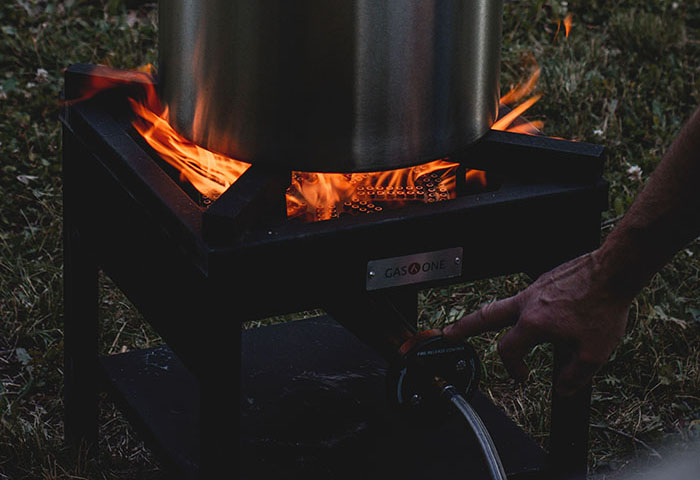
A note on salt pitting: Crawfish and crab boils use a lot of salt, and undissolved salt crystals resting on the pot floor are the main cause of small pits in stainless steel. Bring your water to a full boil before adding salt and seasoning, stir to dissolve, and don't store the pot with salty water in it.
Cleaning the strainer basket, spigot, and lid
The pot body gets the attention, but the basket and spigot are where residue actually hides.
Strainer basket. Hose it from the outside in to push debris back out through the perforations. Soak in hot soapy water for 15 minutes, then work a stiff nylon brush over every hole and along the bottom seam. Hold it up to the light to check for clogged holes. Wipe the handles, since seasoning builds up where hands grip.
Spigot and drain valve. Run hot soapy water through the open valve, then flush with clean water. Push a bottle brush or pipe cleaner through the spout and as far into the valve body as it will reach. After heavy use, unthread the valve from the pot, brush the threads and the inside of the fitting, and reinstall with fresh food-safe PTFE thread tape. Leave the valve open while it dries so no water is trapped inside.
Lid. Wash both sides, paying attention to the rim and any vent hole where steam condenses seasoning into a sticky ring. Dry it fully before setting it back on the pot.
What not to do
Stainless steel is tough, but a few common habits will shorten its life.
- Don't use chlorine bleach. Chlorides attack stainless steel's protective layer and cause pitting.
- Don't use steel wool or carbon-steel brushes. They leave behind iron particles that rust on the surface and look like the pot itself is rusting.
- Don't let salted water sit. Draining the pot the next morning instead of the same day is one of the fastest ways to pit the bottom.
- Don't move or tip a full pot of hot water. Drain it first. Burns from boil pots are a real and common injury.
- Don't store it wet or with the lid sealed. Trapped moisture leads to spots, odors, and mildew.
- Don't assume every boil pot is stainless. Many budget boil pots are aluminum, which reacts differently to acids and abrasives. These steps are for stainless steel.
Drying and storing between seasons
Boil season is short, so most big pots spend months in a garage or shed. A few minutes of prep keeps them ready for the first cook of spring.
- Dry it bone-dry. Towel it, then air dry upside down with the spigot open. Make sure the valve, basket seams, and lid rim have no standing water.
- Store the lid ajar. Rest it upside down on the rim or slip a folded towel under it so air can move. A sealed pot traps humidity and smells.
- Keep the basket separate or dry. If the basket nests inside the pot, make sure both are fully dry first. A paper towel in the bottom absorbs any condensation.
- Cover it from dust. A trash bag or old pillowcase over the top keeps dust and pests out while still letting it breathe.
- Pick a dry, stable spot. Store off the ground, away from pool chemicals, fertilizer, and anything containing chlorine.
- Do a pre-season wash. Before the first boil of the year, give it a quick soap-and-water wash and rinse to clear dust and storage film.
Frequently asked questions
How do you clean a crawfish pot after a boil?
Let the pot cool, pull the basket, and drain the water outdoors through the spigot. Scrape out shells and solids, hose the pot down while it's still warm, then wash with hot water and dish soap using a nylon brush. Rinse well and dry completely, including the valve.
Can I put a large stockpot in the dishwasher?
Most stainless stockpots 20 QT and larger won't physically fit in a home dishwasher. Even when they do, hand washing is better for pots with a spigot, since the valve can trap water and detergent. A hose, a nylon brush, and dish soap get the job done faster.
Why does my stainless steel pot have a white film after boiling?
The white film is usually mineral deposits from hard water combined with starch from potatoes and corn. It isn't harmful. Wipe or soak the area with undiluted white vinegar for 10–15 minutes, then rinse and dry. Using filtered water reduces buildup.
How do I get rainbow stains out of a stainless steel pot?
Rainbow or blue-gold discoloration is heat tint caused by high burner temperatures. It's cosmetic and safe to cook in. To remove it, rub the area with a paste of Bar Keepers Friend and water using a soft cloth, then rinse thoroughly. White vinegar works for lighter tint.
Is it normal for a stainless steel boil pot to rust?
Quality stainless steel resists rust, but surface spots can form when salt sits on the steel or when iron particles from steel wool or tools are left behind. Scrub spots with an oxalic acid cleaner like Bar Keepers Friend. Prevent them by adding salt after the water boils and drying the pot fully.
How do I get the seafood smell out of my boil pot?
Fill the pot partway with water, add about half a cup of baking soda, and boil for 10 minutes. Drain, wash with soap, rinse with a splash of white vinegar, and let it dry in direct sunlight. Make sure the spigot and basket are cleaned too, since odors often hide there.
How often should I deep clean my stockpot?
Wash it after every cook and do a deeper clean, including removing and cleaning the spigot valve, at the end of each boil season or every five to six heavy uses. Treat white film or heat tint whenever it appears so it doesn't build up.
Ready for the next boil
A big stainless stockpot asks very little: drain it the same day, wash it while it's warm, keep salt from sitting on the steel, and dry it completely. Do that, and the pot that fed fifty people at this year's crawfish boil will be ready for the next fifty years of them.
Gearing up for boil season? Explore GasOne's stainless steel stockpots with strainer baskets and high-pressure propane burners, built to handle everything from a backyard crab feed to a full low country boil.

Gas One
STAINLESS STEEL TURKEY FRYING POT W/STEAMER BASKET
$79.99


Leave a comment