



How to Clean a Stainless Steel Seafood Boil Pot
How to Clean a Stainless Steel Seafood Boil Pot
The boil is over and the table is cleared. What's left is a big pot with black soot on the bottom, salty seasoning caked on the walls, and a smell that won't quit. A seafood boil pot takes more work than your everyday stockpot, but it cleans up fast if you use the right approach.
This guide covers how to clean a stainless steel seafood boil pot inside and out, which scrubbers to use, and how to store it so it's ready for the next boil.
Why a Seafood Boil Pot Needs Different Care
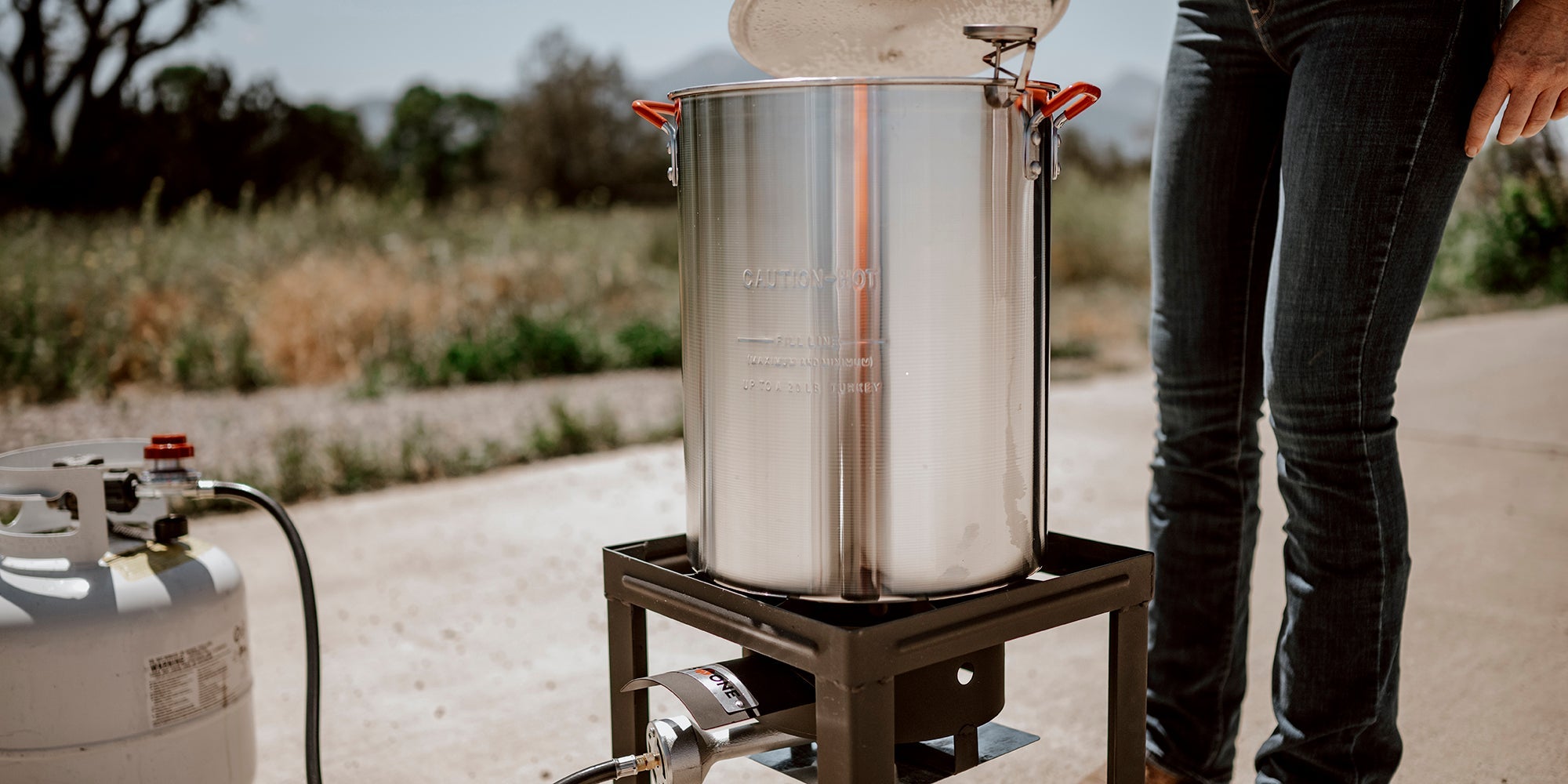
Stainless steel is stainless steel, whether it's a 20 qt kitchen pot or an 80 qt boil pot. The difference is what the pot goes through.
|
|
20 qt household pot |
Seafood boil pot |
|---|---|---|
|
Heat source |
Indoor stove |
High-output outdoor propane burner |
|
Exterior mess |
Minimal |
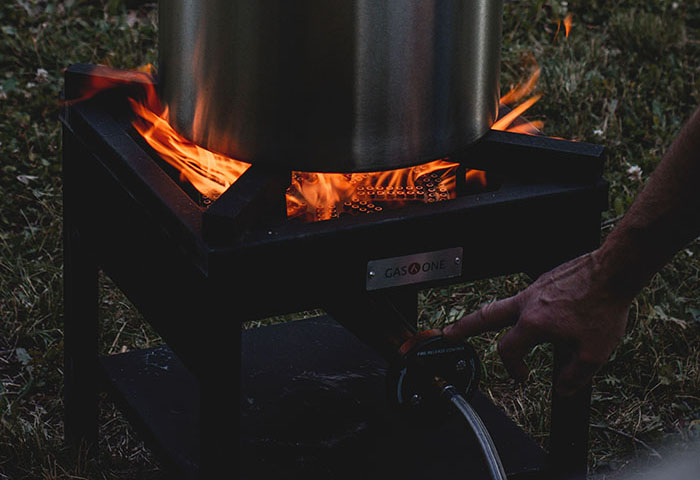
Black soot on the bottom and sides |
|
Interior mess |
Food residue |
Heavy salt, Cajun seasoning, citrus, corn and potato starch |
|
Odor |
Rarely an issue |
Lingering shellfish smell |
|
Extra parts |
Lid |
Strainer basket, often a drain spigot |
|
Where you wash it |
Sink or dishwasher |
Outdoors with a hose |
Heavy salt is the one to watch. Chlorides left sitting on stainless steel can cause pitting and rust spots over time. Cleaning soon after the boil prevents most long-term damage.
What You'll Need
- Garden hose with a spray nozzle
- Dish soap with degreaser (such as Dawn)
- Bar Keepers Friend or another oxalic acid cleanser
- Non-scratch scrub pad
- Stainless steel scrubber (the coiled kind), for soot and burnt-on spots only
- Long-handled stiff brush
- White vinegar and baking soda, for odor
- Old towels or a drying rack
How to Clean a Seafood Boil Pot, Step by Step
- Empty and rinse right away. Dump the boil water once it has cooled enough to handle safely. Hose out shells, seasoning and debris before anything dries on.
- Soak the inside. Fill the pot a few inches with hot water and a good squeeze of dish soap. Let it sit 15 to 20 minutes to loosen starch and seasoning.
- Scrub the interior. Use a non-scratch pad or long-handled brush. Scrub along the grain of the steel, not in circles.
- Treat stains and heat tint. For white salt spots, cloudy starch film or rainbow discoloration, sprinkle Bar Keepers Friend on a damp pad and work it in. Rinse well.
- Remove soot from the outside. Flip the pot over. Apply degreasing dish soap, then scrub the bottom with a stainless steel scrubber. Soot is oily, so plain water just smears it.
- Clean the basket. Scrub both sides with a stiff brush, then spray the holes from the outside in to push trapped seasoning out.
- Flush the spigot. If your pot has a drain valve, run hot soapy water through it with the valve open. Remove it and clean the threads if it still smells.
- Kill the odor. If the pot still smells like shellfish, rinse it with a 1:1 mix of white vinegar and water. For stubborn smells, scrub with a baking soda paste.
- Dry completely. Towel it off, then set it upside down in the sun or a dry spot until there's no moisture left.
Can You Use a Stainless Steel Scrubber on a Stainless Pot?
Yes, for the tough spots. A coiled stainless steel scrubber is made of the same metal as your pot, so it won't leave behind anything that rusts. It will leave fine scratches, though, so save it for the bottom and exterior where soot and scorch marks build up.
Soap-filled steel wool pads like SOS and Brillo can work on stainless too, but use them with care. They're made of ordinary carbon steel, not stainless steel. Tiny fibers can break off and settle into fine scratches on the pot. If they stay wet, they tend to resut and leave small orange specks on the surface. However is it more of than not surface rust from the pad itself and not the stockpot, but it is worth preventing, especially on a boil pot exposed to salt and outdoor storage. Take extra measures to ensure your pot is clean from the rust that may have been left from the wool soap pad.
|
Scrubber |
On a stainless boil pot |
Best for |
|---|---|---|
|
Non-scratch pad |
Safe everywhere |
Everyday cleaning, interior |
|
Stainless steel scrubber |
Safe, but scratches |
Soot, burnt-on spots, exterior |
|
Steel wool soap pad (SOS, Brillo) |
Use with care; can scratch and leave rust-prone fibers |
Occasional heavy scrubbing, followed by a thorough rinse |
Whatever you use, rinse thoroughly afterward so no loose fibers stay on the surface.
Stainless or Aluminum? Check Before You Scrub
Many boil pots are aluminum, not stainless. Aluminum is lighter and duller in color, and a magnet won't stick to it. (Some stainless isn't magnetic either, so weight and color are the better clues.) Aluminum darkens with use no matter what. Skip oven cleaner and strong alkaline degreasers on it, since they can discolor or pit the surface. To find our more about the differences of Aluminum Stockpots for large out cooks and outdoor boils read our article
Storing Your Boil Pot
- Store it only when it's completely dry, with the lid off or cracked open for airflow.
- Keep the basket outside the pot, or set a towel between them so trapped moisture doesn't sit on the metal.
- Keep it in a dry spot off the ground, not in a damp shed corner.
Mistakes to Avoid
- Letting salty boil water sit in the pot overnight
- Using chlorine bleach, which can corrode stainless steel
- Scrubbing in circles with abrasive pads, which leaves visible swirl marks
- Putting the pot away while it's still wet
Frequently Asked Questions
How do you get black soot off the bottom of a boil pot? Use a degreasing dish soap and a stainless steel scrubber, scrubbing along the grain. Soot is oily, so water alone won't lift it. Clean it after every boil, before it bakes on further.
How do you get the fishy smell out of a seafood boil pot? Rinse it with equal parts white vinegar and water, then let it dry in the sun. For stubborn odors, scrub with a baking soda paste before rinsing.
Can I put my seafood boil pot in the dishwasher? Most boil pots are too big to fit. Even if yours fits, washing by hand outdoors with a hose is faster and easier on spigot seals.
Why does my stainless steel pot have white spots after a boil? Those are usually salt or mineral deposits. Bar Keepers Friend or a vinegar rinse removes them. Rinsing promptly after the boil keeps them from forming.
Is it safe to use steel wool on a stainless steel pot? A stainless steel scrubber is fine for tough spots. Avoid carbon steel wool pads like SOS or Brillo, which can leave fibers that rust.
Shop GasOne Stockpots
Whether you're boiling for four or forty, there's a GasOne stockpot sized for the job.
|
Stockpot |
Capacity |
Key features |
Shop |
|---|---|---|---|
|
SP-20CA |
20 qt |
Stainless Steel Construction, Capsule Bottom for heat retention, Variety of cooking applications |
|
|
TP-32 |
32 qt |
Stainless Steel Construction, Capsule Bottom for heat retention, Variety of cooking applications, Includes a basket |
|
|
TP-53 |
53qt] |
Stainless Steel Construction, Capsule Bottom for heat retention, Variety of cooking applications, Includes a basket |
|
|
TP-64 |
64 qt] |
Stainless Steel Construction, Capsule Bottom for heat retention, Variety of cooking applications, Includes a basket |
Ready for the Next Boil
A few minutes of cleanup after each boil keeps your pot performing for years. Shop GasOne's seafood boil pots and outdoor burners to gear up for your next crawfish, crab or shrimp boil.


Leave a comment