



Cast iron burner heads are built for high heat and long service life, while cast aluminum burner heads are lighter, rust-resistant and made to tighter tolerances. Neither is better across the board. The right one depends on how hot you run your burner, how often you move it, and where you store it.
The burner head is where gas meets air and becomes flame. Its material decides how well it handles extreme heat, how it stands up to weather, and how evenly it burns over years of use. Here's what's actually different between the two.
How a Burner Head Works
From tank to flame
How propane moves through the burner system
-
01 · SUPPLY →
Propane tank
Stores the fuel.
-
02 · PRESSURE →
Regulator
Controls gas pressure.
-
03 · FLOW →
Valve & orifice
Control gas flow.
-
04 · MIX →
Air shutter
Adjusts the air mixed with gas.
-
05 · DISTRIBUTE →
Burner head
Distributes the gas-air mixture.
-
06 · FLAME
Burner ports
Shape the flame.
Gas leaves the tank, passes through the regulator and valve, and shoots through a small orifice. Air is drawn in at the air shutter and mixes with the gas. The burner head then spreads that mixture evenly and releases it through a ring of ports, where it ignites.
Because the head sits directly in the flame, it takes the most heat and the most abuse of any part of the burner. The size, spacing and consistency of its ports decide how even the flame is. The material decides how long those ports keep their shape.
The Materials, Side by Side
|
Property |
Cast iron |
Cast aluminum |
|---|---|---|
|
Melting point |
About 2,100–2,200°F (1,150–1,200°C) |
About 1,050–1,220°F (570–660°C), depending on alloy |
|
Density |
About 7.2 g/cm³ (heavy) |
About 2.7 g/cm³ (roughly one-third the weight) |
|
Thermal conductivity |
About 50 W/m·K |
About 100–150 W/m·K |
|
Strength at high heat |
Holds its shape at very high temperatures |
Loses strength well below its melting point |
|
Corrosion |
Rusts if left bare and wet |
Forms a protective oxide layer; doesn't rust |
|
Brittleness |
Can crack from sudden temperature change or a hard drop |
Tougher against impact; more likely to bend than crack |
|
Manufacturing |
Sand cast; rougher surface |
Often die cast; smoother, more precise ports |
Figures are typical ranges for common cooking-grade alloys. Exact values vary by manufacturer.
One point often confuses buyers. A propane flame burns far hotter than aluminum's melting point, yet aluminum burner heads work fine. The steady flow of cool gas and air through the head carries heat away, so the metal itself runs much cooler than the flame above it.
How They Perform in Real Use
High-heat cooking
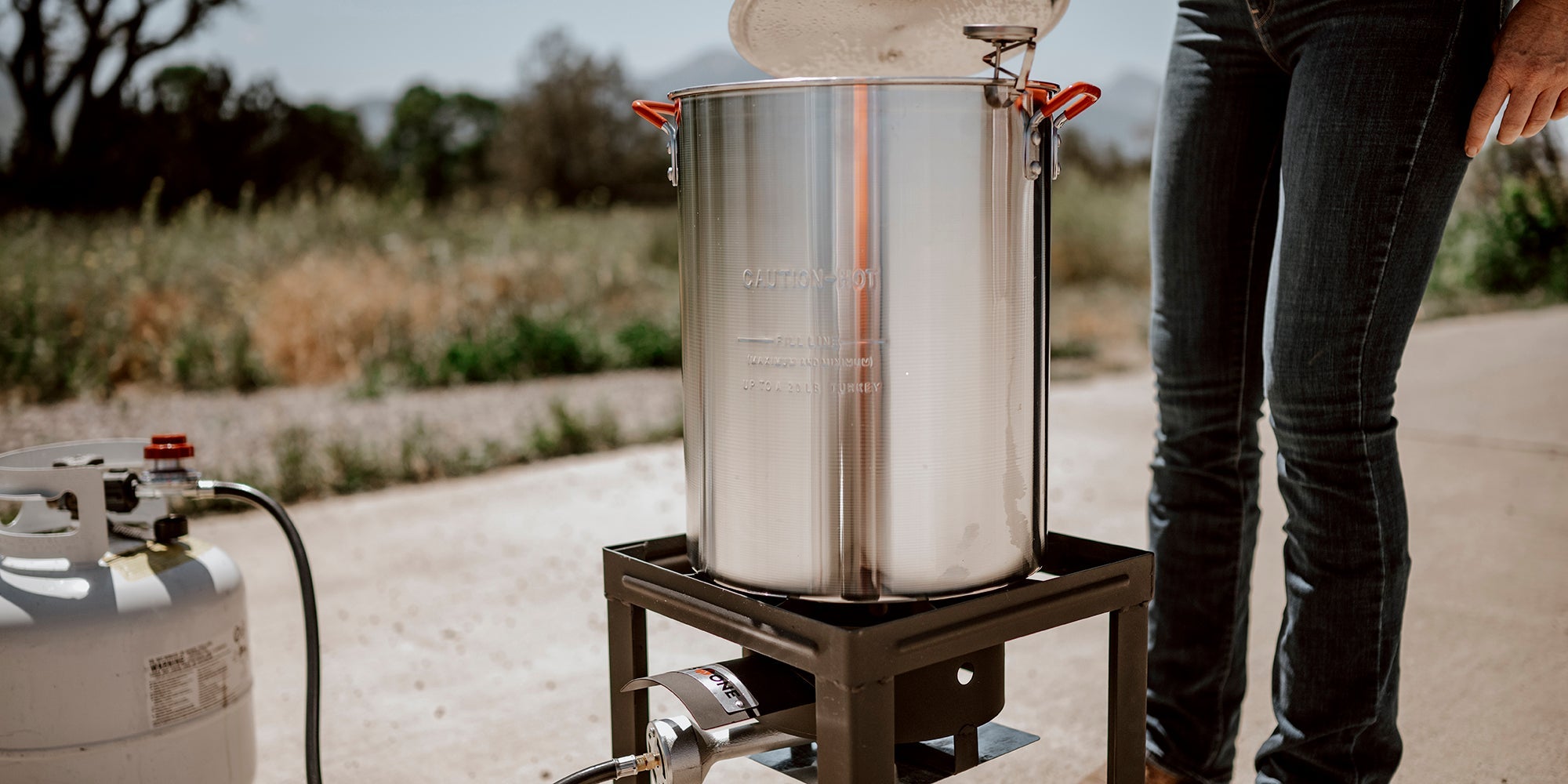
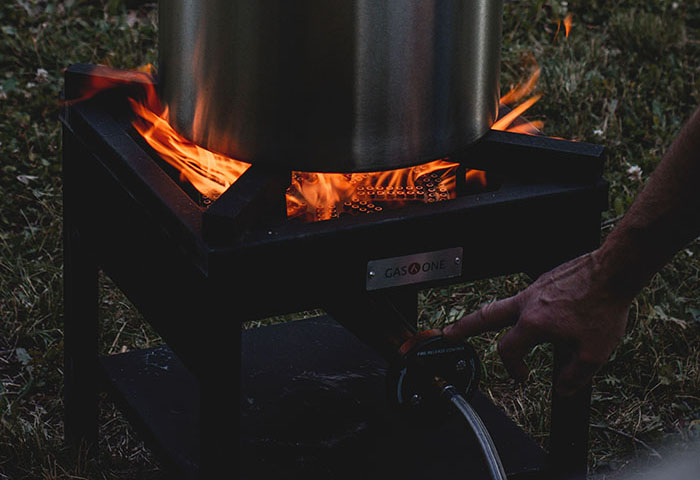
Cast iron is the standard for high-output burners like jet burners and banjo burners used for seafood boils, turkey frying and wok cooking. Its high melting point and strength at temperature let it sit in an intense flame for hours without sagging or warping. Its mass also holds heat, which helps steady the flame in wind.
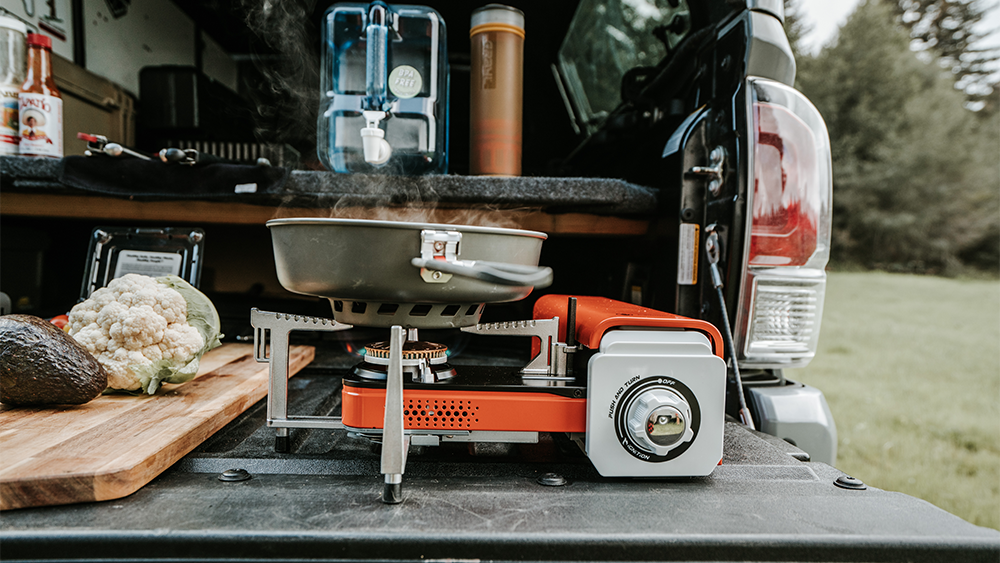
Cast aluminum performs well at moderate outputs, which is why it's common on portable stoves and tabletop burners. Aluminum spreads heat quickly and evenly, so the head warms up fast and burns consistently. Pushing aluminum past its design limits, such as running it at full power for long periods or with oversized cookware trapping heat, can soften or distort it over time.
Flame quality
Aluminum heads are usually die cast, a process that produces smooth surfaces and precisely sized ports. That consistency tends to give an even, well-shaped flame right out of the box. Cast iron heads are usually sand cast, so ports can vary slightly, though a well-made cast iron head burns just as cleanly.
Weather and corrosion
This is where aluminum shines. It forms a thin oxide layer that protects it from rust, so an aluminum burner can handle humidity, rain and coastal air with little attention. Bare cast iron rusts when exposed to moisture. Rust can flake into the ports and clog them, leading to an uneven or weak flame.
Weight and portability
At roughly one-third the weight, aluminum is the clear choice for camping, tailgating and anything you carry. A heavy cast iron head adds stability to a stand-mounted outdoor burner but makes it less portable.
Durability over time
Cast iron can last for decades if kept dry and protected. Its weakness is brittleness: dropping it on concrete or splashing cold water on it while hot can crack it. Aluminum resists impact better and won't rust, but repeated overheating can gradually warp it.
Care and Maintenance
Cast iron burner heads
- Let the burner cool naturally. Never pour water on a hot head.
- Brush off rust and debris with a wire brush, then clear each port with a paper clip or small wire.
- After cleaning, wipe on a thin coat of high-smoke-point oil or use high-temperature grill paint on the outside to slow rust.
- Store it dry and covered, ideally indoors in the off-season.
Cast aluminum burner heads
- Wash with warm, soapy water and a soft brush. Avoid oven cleaner and strong alkaline degreasers, which can pit aluminum.
- Clear ports with a soft wire or toothpick; don't enlarge them.
- Dry completely before storing.
- Avoid running at full output with oversized pots that trap heat around the head.
For both: check the ports for spider webs and debris before each season. A yellow, sooty or uneven flame usually means blocked ports or an air shutter that needs adjusting.
Which Burner Head Is Right for You?
|
Use |
Best pick |
Why |
|---|---|---|
|
Seafood boils and turkey frying |
Cast iron |
Handles sustained high output under large, heavy pots |
|
Wok cooking and searing |
Cast iron |
Stays stable under intense, focused heat |
|
Homebrewing |
Cast iron |
Long boils at high output |
|
Camping and backpacking |
Cast aluminum |
Light and rust-resistant |
|
Tailgating and portable cooking |
Cast aluminum |
Easy to carry, quick to heat |
|
Coastal or humid storage |
Cast aluminum |
Won't rust between uses |
|
Everyday backyard cooking at moderate heat |
Either |
Choose by weight, storage and budget |
The short version: if it stays in one place and runs hot, go cast iron. If it travels or lives outside in damp air, go cast aluminum.

GasOne
High Pressure 2-Burner Stove
$89.99
Frequently Asked Questions
Is a cast iron burner better than a cast aluminum burner? For sustained high heat, yes. Cast iron holds its shape at higher temperatures and lasts for decades when kept dry. Cast aluminum is better when weight and rust resistance matter more.
Will a cast aluminum burner melt? Not under normal use. Gas and air flowing through the head keep the metal far cooler than the flame. Running it beyond its rated output for long periods can warp it over time.
Why is my cast iron burner rusting? Bare cast iron rusts when exposed to moisture. Brush off the rust, clear the ports, apply a light coat of high-temperature oil or paint, and store it dry and covered.
Why is my burner flame yellow? A yellow or sooty flame usually means blocked ports or too little air. Clean the ports and adjust the air shutter until the flame burns mostly blue.
Can I replace an aluminum burner head with cast iron? Only with a head designed for that burner. The orifice, air shutter and head are matched to each other, so check with the manufacturer before swapping parts.
Built to Burn
The right burner head comes down to how you cook. Cast iron is for high heat that runs all day, and cast aluminum is for heat you take with you. Whichever you choose, clean ports and dry storage will keep it firing strong for years.


Leave a comment