



For big outdoor cooks, aluminum wins on weight, heat-up speed and price, while stainless steel wins on durability and easy care. The right choice depends on what you're cooking, how often, and how much lifting you want to do.
When you're filling an 80 qt pot for a crawfish boil or a Thanksgiving turkey fry, the pot's material affects more than you'd think. It changes how fast the water boils, how much fuel you burn, how heavy the pot is when it's full, and how it holds up season after season. Here's how the two compare.
Aluminum vs. Stainless Steel at a Glance
|
|
Aluminum stockpot |
Stainless steel stockpot |
|---|---|---|
|
Weight |
Light, about one-third the weight of steel for the same thickness |
Heavy, especially when full |
|
Heat-up speed |
Fast; spreads heat evenly |
Slower unless it has a clad (layered) bottom |
|
Fuel use |
Less propane to reach a boil |
More propane per boil |
|
Durability |
Softer; can dent and warp |
Tough; resists dents and warping |
|
Appearance over time |
Darkens and dulls with use |
Stays bright with basic care |
|
Cleaning |
Needs gentle cleaners; no harsh alkalines |
Tolerates scrubbing and stronger cleaners |
|
Acidic foods |
Can react and affect flavor |
Non-reactive |
|
Price |
Lower |
Higher |
|
Best for |
Frequent large boils, turkey frying |
Long simmers, acidic recipes, long-term use |

GasOne
SEAFOOD BOILER SET
$169.99
Heat and Weight: Where Aluminum Shines
Aluminum conducts heat many times better than stainless steel. On a high-output propane burner, that means a big pot of water reaches a rolling boil faster and comes back to a boil sooner after you drop in the seafood. Faster recovery means more even cooking and less propane burned over a long day of batches.
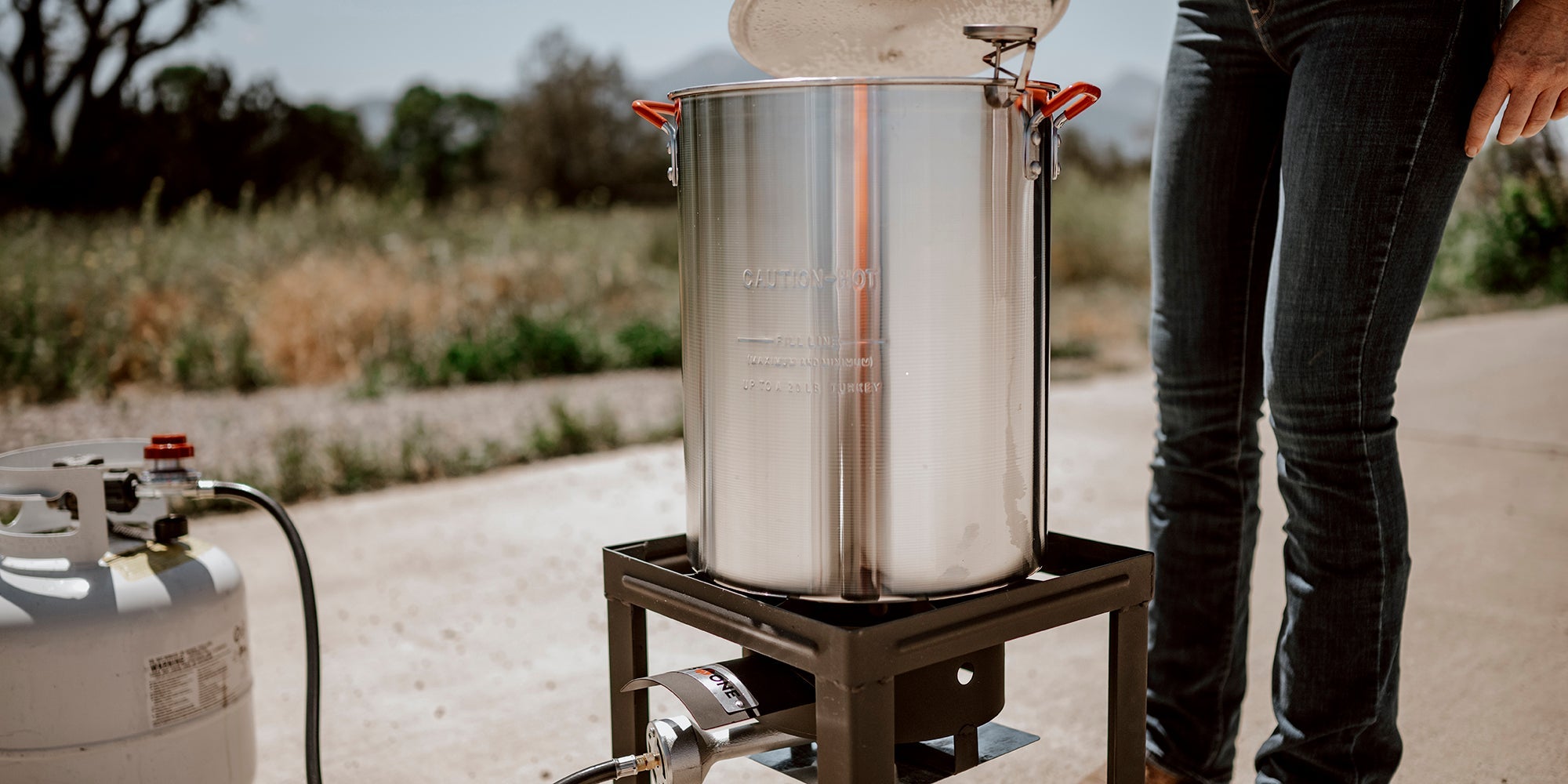
Weight matters just as much. A pot holding 60 or 80 quarts of water already weighs well over 100 pounds when full. A lighter aluminum pot is easier to carry empty, lift onto the burner, and handle when you drain it. That's why aluminum is the traditional choice for crawfish boils and turkey fryers.
Stainless steel heats more slowly and less evenly on its own. Many quality stainless pots fix this with a clad bottom, a layer of aluminum sandwiched between the stainless. That gives you better heat spread with a stainless cooking surface.
Durability and Care: Where Stainless Steel Wins
Stainless steel is built to take a beating. It resists dents, won't warp under high burner heat, and keeps its finish for years. It also handles tougher cleaning, including degreasers, Bar Keepers Friend, and a stainless steel scrubber on burnt-on soot.
Aluminum is softer. It can dent if dropped and may warp if heated empty. It also darkens with use no matter how well you clean it. That's normal and doesn't affect cooking. When cleaning aluminum, skip oven cleaner and strong alkaline degreasers, which can discolor or pit the surface. Mild dish soap and a non-scratch pad do the job.
A note on acidic foods: Aluminum can react with acidic ingredients like tomatoes, vinegar and lots of lemon. For a quick boil this is rarely noticeable. For long simmers of acidic sauces or chili, stainless steel is the better choice because it's non-reactive and won't affect flavor.
Which Stockpot Is Right for Your Cook?
|
Cook |
Best pick |
Why |
|---|---|---|
|
Crawfish, crab and shrimp boils |
Aluminum |
Fast boil and recovery, lighter to lift and drain |
|
Turkey frying |
Aluminum |
Heats oil quickly, easier to handle |
|
Big-batch stock, chili or tomato sauce |
Stainless steel |
Non-reactive for long, acidic simmers |
|
Homebrewing |
Stainless steel |
Easy to sanitize, non-reactive, lasts for years |
|
Tamales and steaming |
Either |
Mostly water and steam; choose by weight and budget |
|
Occasional backyard cook on a budget |
Aluminum |
Lower cost for a large capacity |
|
Frequent use, long-term investment |
Stainless steel |
Holds up to years of hard use |
If you cook big more than a few times a year, many outdoor cooks end up owning both: aluminum for boils and fries, stainless for everything else.
Shop GasOne Stockpots
From backyard boils to holiday fries, find a GasOne stockpot sized for your crowd.
|
Stockpot |
Material |
Capacity |
Key features |
Shop |
|---|---|---|---|---|
|
FS Series |
Aluminum |
60, 80, 100 QT |
Frying/Boiling set including cooker |
[Link] |
|
SP-20CA |
Stainless] |
20 QT | Stainless Steel Construction, includes capsule bottom for heat retention |
[Link] |
|
AP series |
Aluminum |
60, 80, 100 QT |
Includes Basket, Variety of size options for different types of outdoor cooking |
[Link] |
| TP Series | Stainless Steel | 32, 36, 53, 64, 84, 100 QT | Includes Basket, Variety of size options for different types of outdoor cooking | Link |
Frequently Asked Questions
Is aluminum or stainless steel better for a seafood boil? Aluminum is the most popular choice. It boils water faster, recovers heat quickly after you add the seafood, and is lighter to lift and drain. Stainless steel works well too if you want a pot that lasts longer and cleans up brighter.
Is it safe to cook in an aluminum stockpot? Yes. Aluminum stockpots are widely used for boiling and frying. For long simmers of acidic foods like tomato sauce, stainless steel is the better pick because it won't react with the food.
Why did my aluminum pot turn dark? Aluminum naturally darkens with heat, water minerals and use. It's cosmetic and doesn't affect performance.
How can I tell if my pot is aluminum or stainless steel? Aluminum is noticeably lighter and has a duller, grayer finish. A magnet test can help, but some stainless steel isn't magnetic, so weight and color are more reliable clues.
Which stockpot size do I need for a seafood boil? A common rule of thumb is about 1 quart of pot capacity per pound of seafood, plus room for corn, potatoes and water. For a 30 lb crawfish boil, an 80 to 100 qt pot is a comfortable fit.
Keep Your Pot Ready for the Next Cook
Whichever material you choose, good cleanup keeps it performing for years. Read our guide on how to clean a seafood boil pot for step-by-step tips on removing soot, salt and odor.


Leave a comment